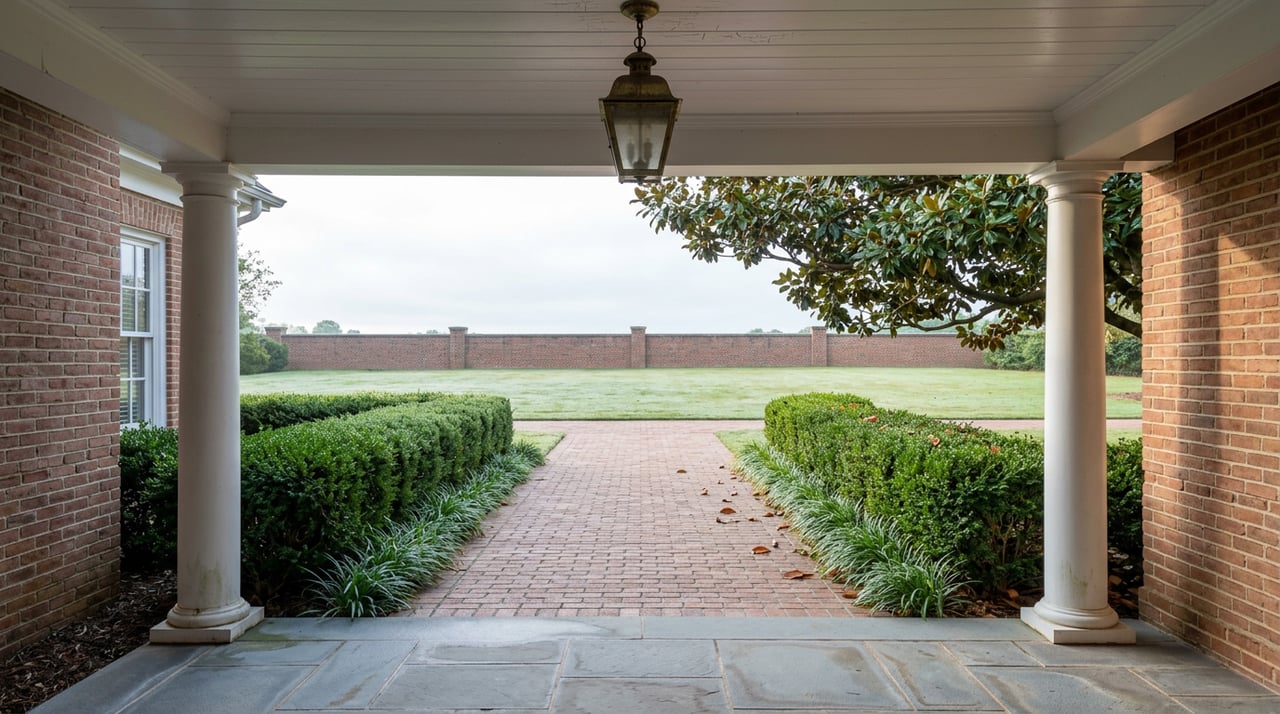
If you drove past the Carolina Inn on the morning of September 1, past the white columns and the usual cluster of wedding photographers scouting the portico, would you have guessed that inside, Meta's CEO was about to tell a room full of world leaders and technology executives that starting a company is about to get a lot cheaper?
The Town of Chapel Hill's public notice about the event ran two sentences. The federal government was hosting something called the G20 Innovation Forum at the Carolina Inn on September 1 and 2, the notice said, and residents should expect increased law enforcement presence and traffic downtown. The notice focused on logistics; the event itself brought technology and government leaders to the Carolina Inn, a short walk from Franklin Street, that week.
Who Came to Chapel Hill
Here is who was actually inside a hotel on the National Register of Historic Places, a building better known locally for afternoon tea and graduation photos than global summitry: OpenAI's Sam Altman. Nvidia's Jensen Huang. Palantir's Alex Karp. Anthropic co-founder Tom Brown. Meta's Mark Zuckerberg, in person. Elon Musk, appearing by video. Commerce Secretary Howard Lutnick. White House science and technology adviser Michael Kratsios, running the room.
This was the G20 Innovation Ministerial, the technology track of the United States' year hosting the G20, following a finance ministers' meeting in Asheville at the Omni Grove Park Inn earlier that same week and preceding a leaders' summit set for Miami in December. Chapel Hill got the middle chapter, and the one with the most recognizable faces in it.
Zuckerberg used his remarks to argue that artificial intelligence is about to collapse the cost of building a company. He told the group he expects the cost of starting a business to go way down, predicting it will take far less capital and far fewer people to get something off the ground. As CNBC reported, Karp, sitting for a fireside chat with Lutnick the next day, pushed back on the industry's own doom narrative, saying he doesn't believe in it, while also naming the part of the AI story that actually worries him: the optics of extreme wealth concentrating in a handful of hands. He put it plainly, saying he doesn't think people are comfortable with him being twenty times wealthier than everyone else, and that it leaves a bad taste in people's mouths.
Beyond the executives' remarks, the forum also shaped a policy conversation that would carry Chapel Hill's name.
A Framework With the Town's Name Attached
The detail most residents will never think about again, unless they happen to read AI policy coverage for the next several years, is the one with the most staying power. On day one, Kratsios unveiled something called the Carolina Principles for Emerging Technology, a framework the G20's Innovation Working Group had spent months finalizing before bringing it to Chapel Hill for its public debut. The principles don't force countries to standardize their regulatory systems. They lay out shared ground for supporting the discovery, development, and deployment of new technology while leaving each nation free to legislate its own way.
Whatever comes of it, the name is locked in. Trade negotiators, policy researchers, and journalists writing about AI governance five years from now will reference the Carolina Principles the way people reference the Paris Agreement or the Basel Accords, and the reference point will be a hotel at the edge of UNC's campus rather than a national capital. Kratsios said as much when explaining the choice of venue, pointing to the Research Triangle, the fact that UNC was the country's first public university, and North Carolina's claim to being first in flight as reasons the conversation belonged here rather than in Washington.
That's a strange kind of permanence for a town used to being defined by basketball season and a college football rivalry an hour down the road. The G20 didn't leave behind a building or a plaque. It left behind a name, attached indefinitely to a document that will outlive most of the news cycle around the summit itself.
What Was Happening on the Sidewalk
Inside the Carolina Inn, the tone was mostly optimistic technologists talking to government officials about growth. ABC11 reported that outside, on Wednesday, roughly 150 people gathered to make sure a different version of the story got told. Organized in part by the student group Sunrise UNC, alongside former UNC faculty and other community activists, the crowd blocked the street outside the hotel while police set up barricades and redirected traffic around them.
ABC11 quoted Sunrise UNC spokesperson Isabelle Lynn saying, "We're basically here to make noise, and to show Lee Roberts and the tech billionaires that we're paying attention."
Two retired UNC faculty members in the crowd raised a more specific concern: the rapid growth of financial markets tied to emerging technologies, and the broader societal effects they worry could follow. Students interviewed separately echoed the same unease from a different angle, questioning why the people setting the terms of AI policy were largely the executives who stand to profit most from it, and asking what guarantees exist for workers whose jobs the technology might eventually replace.
None of that erased the summit or changed its agenda. But it means the accurate account of that week includes both rooms: the one where a Meta executive predicted cheaper startups, and the sidewalk outside where UNC students and retired professors stood in the road to say they weren't so sure this was worth celebrating. Chapel Hill Mayor Jess Anderson's public comment ahead of the event, asking residents to plan ahead and give themselves extra time getting around downtown, was really an invitation to hold both realities at once, even if the notice itself didn't spell that out.
Six Days Later
On Labor Day, the Town of Chapel Hill's offices were closed, the same offices that spent the prior week coordinating parking changes, police staffing, and federal security logistics for a summit with global press credentials. That's the part of this story that's easy to miss if you weren't paying attention in real time: how fast the town folded the whole thing back into an ordinary September.
The barricades outside the Carolina Inn are gone. The satellite trucks that lined the block for CNBC's live coverage of Lutnick and Huang's remarks have moved on to whatever the next dateline is. Franklin Street's version of a slow Tuesday has already returned, tea service and wedding photos and all.
What doesn't fold back in that easily is the name. Somewhere in a policy paper being drafted right now, someone is typing the words "Carolina Principles" without a second thought about which Carolina Inn, or which Franklin Street, or which town at the edge of a state university campus first put that phrase into the world. For one week in September, this address mattered more than it usually does, and the reminder of it will keep surfacing in places most residents will never see, long after the traffic detours are forgotten.
The advisory covered practical logistics for the event. The forum also put the town's name on a technology-policy framework, whether anyone driving past the Carolina Inn that Tuesday morning realized it or not.
If you're the kind of person who reads local stories like this because you already call Chapel Hill home, that instinct to pay attention to what's happening in your own backyard is exactly the kind of local fluency Shannon Kennedy brings to every conversation about this town, whether you're weighing a move, planning ahead for one, or just curious what else is unfolding a few blocks from where you live. Let's Connect.